

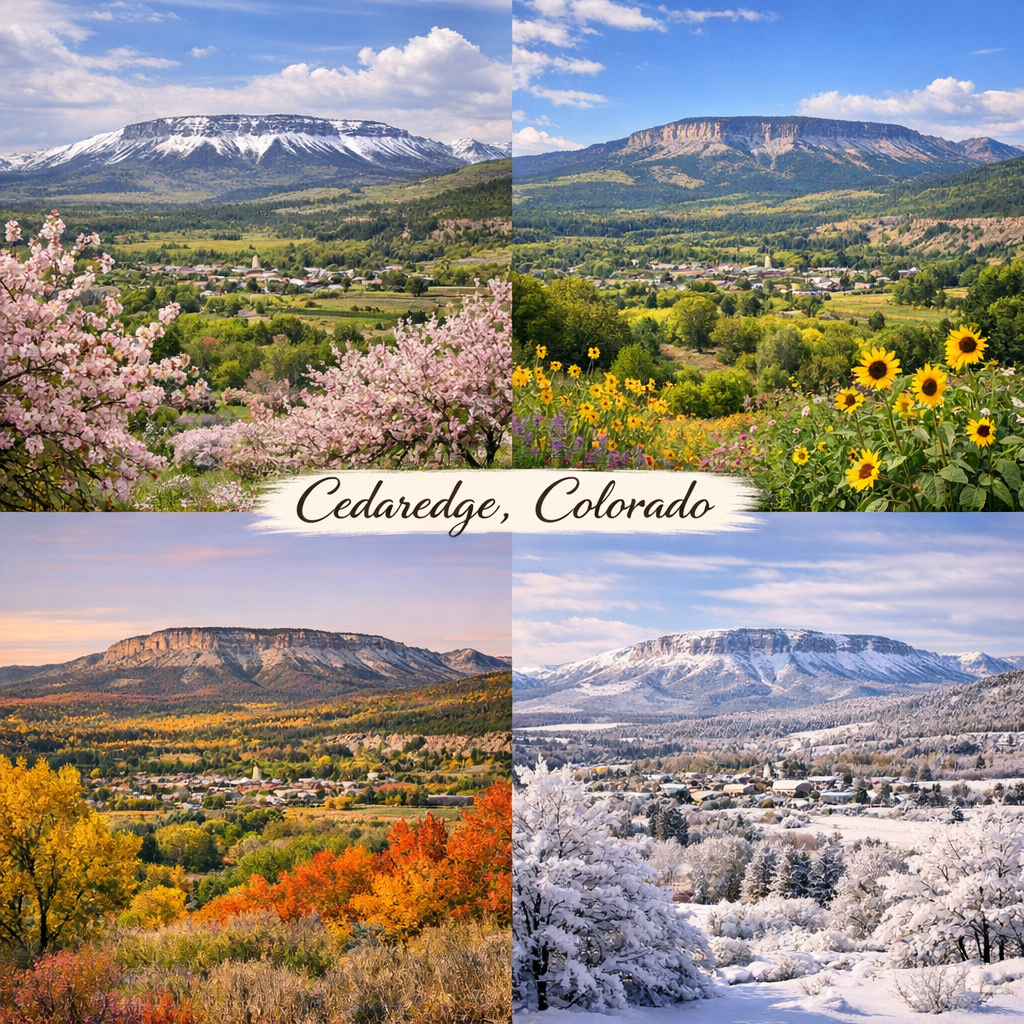
Cedaredge, Colorado, nestled at the base of the Grand Mesa, experiences a diverse climate characterized by distinct seasonal variations. Understanding these patterns can help residents and visitors make the most of what each season offers.
Seasonal Temperature Variations
Throughout the year, Cedaredge’s temperatures fluctuate significantly. Winters are cold, with average lows around 18°F (-8°C) in January, the coldest month. Summers, on the other hand, are warm and dry, with average highs reaching 88°F (31°C) in July, the warmest month.
Precipitation Patterns
Annual precipitation in Cedaredge averages approximately 12.85 inches (326.41 mm). The wettest month is typically April, with an average of 1.24 inches (31.5 mm) of precipitation, while June is the driest, averaging 0.61 inches (15.49 mm).
Environmental Considerations
Given its semi-arid climate, water conservation is crucial in Cedaredge. The town relies on water from the Grand Mesa, and fluctuations in snowpack can impact water availability. For instance, in April 2026, the town enacted a 30% reduction in domestic water use due to poor snowpack and rapid runoff.
Residents are encouraged to stay informed about local water restrictions and practice conservation measures, such as limiting outdoor watering and using water-efficient appliances.
Planning Activities Around the Climate
Understanding Cedaredge’s climate can enhance your experience of the area. Summer months are ideal for outdoor activities like hiking and fishing, while winter offers opportunities for snowmobiling and Nordic skiing on the Grand Mesa’s trails. Always check current weather conditions and be prepared for sudden changes, especially during transitional seasons.
By staying attuned to Cedaredge’s climate patterns and environmental considerations, you can make informed decisions and fully enjoy the natural beauty this region has to offer.